A low-cost 3D display
Event Scale Version
Work:
Scale Production
At EPAD we received a lot of interest from advertising execs, so I began researching various options for the mass production of the pyramid.
My first thought was to approach a vacuum-form company. They could hit the price point we want, but there are real challenges around distribution.
Then we spoke to a specialty printing company that we've worked with in the past. They provided a series of prototypes that used a side piece and a base to achieve stability. The base reduces picture quality, and their quotes are higher than we think we can market.
Another specialty printing company has created a prototype that we really like, it has a separate base piece and it can adhere to the paper in a way that guarantees subscribers will notice it. The price is right in our target range. The only drawbacks are its size and the thinness of the plastic.
Unfortunately, this process took a long time, and some steam was lost, both as the Sandbox moved it's focus to more pressing opportunities and as we missed deadlines with internal advertisers.
Alternative Display Options
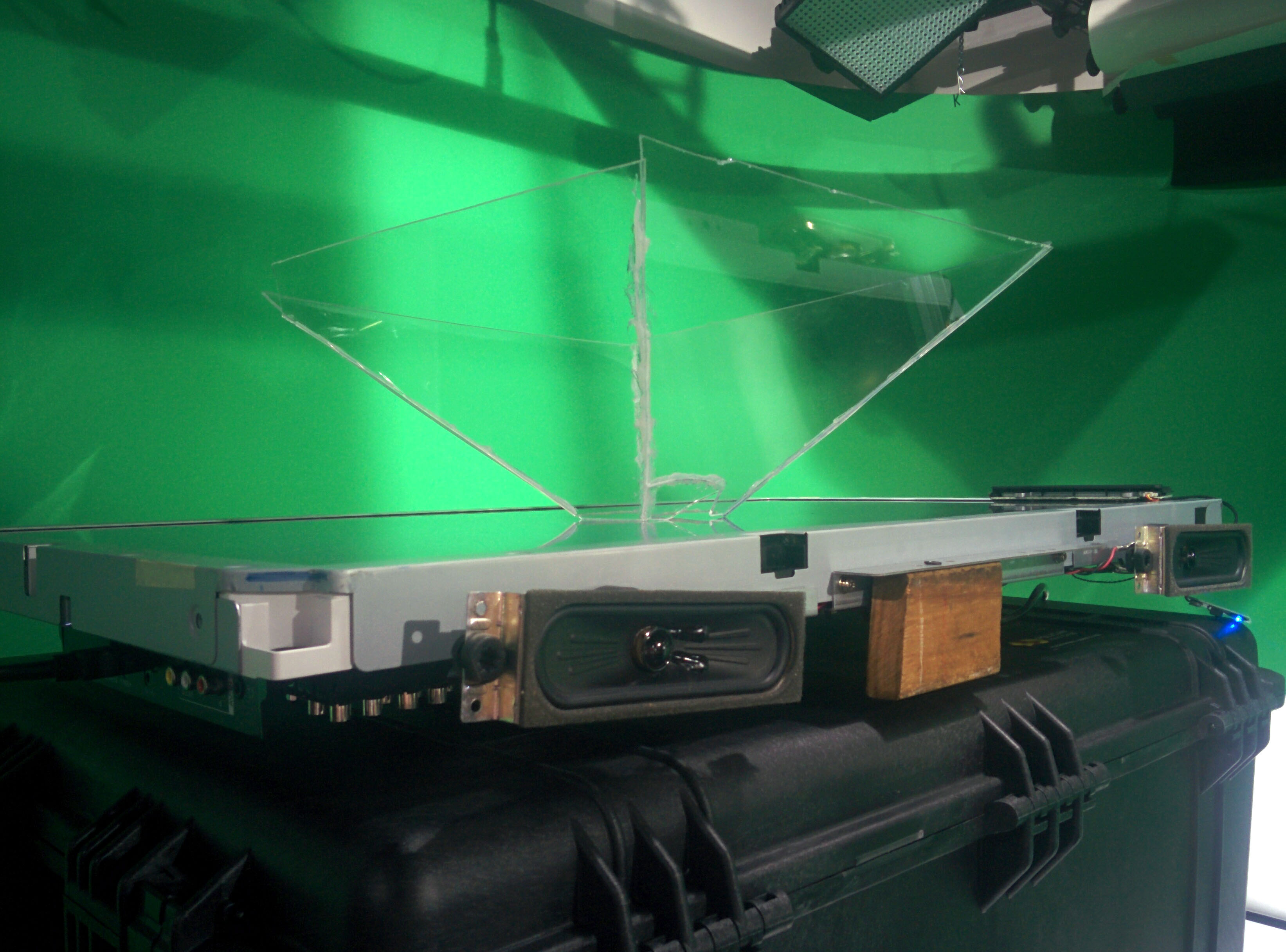
We also discussed event based display options. As a proof of concept, I tore apart an old TV and created a large scale version with plexiglass, which we demoed for the board of directors when they visited the Washington Bureau.
Next Steps
Feedback
First Prototype
Work:
This experiment uses an illusion called Pepper's Ghost. It's an old concept, drawn from a 19th-century magic trick. The illusion uses a transparent and glossy surface (often glass) placed at an angle to the audience. The surface reflects an image (with a bright foreground and a dark background) making it appear to float in front of the audience.
Various plans for a pyramid shaped, phone based pepper's ghost illusion started to go viral among DIY communities after the popularity of the Tupac Hologram at Coachella in 2012. Then in 2015 KitKat used a similar design for a commercial application.
I wanted to test a similar product with the idea of doing a series of videos about artifacts from the African American Smithsonian in advance of its opening.
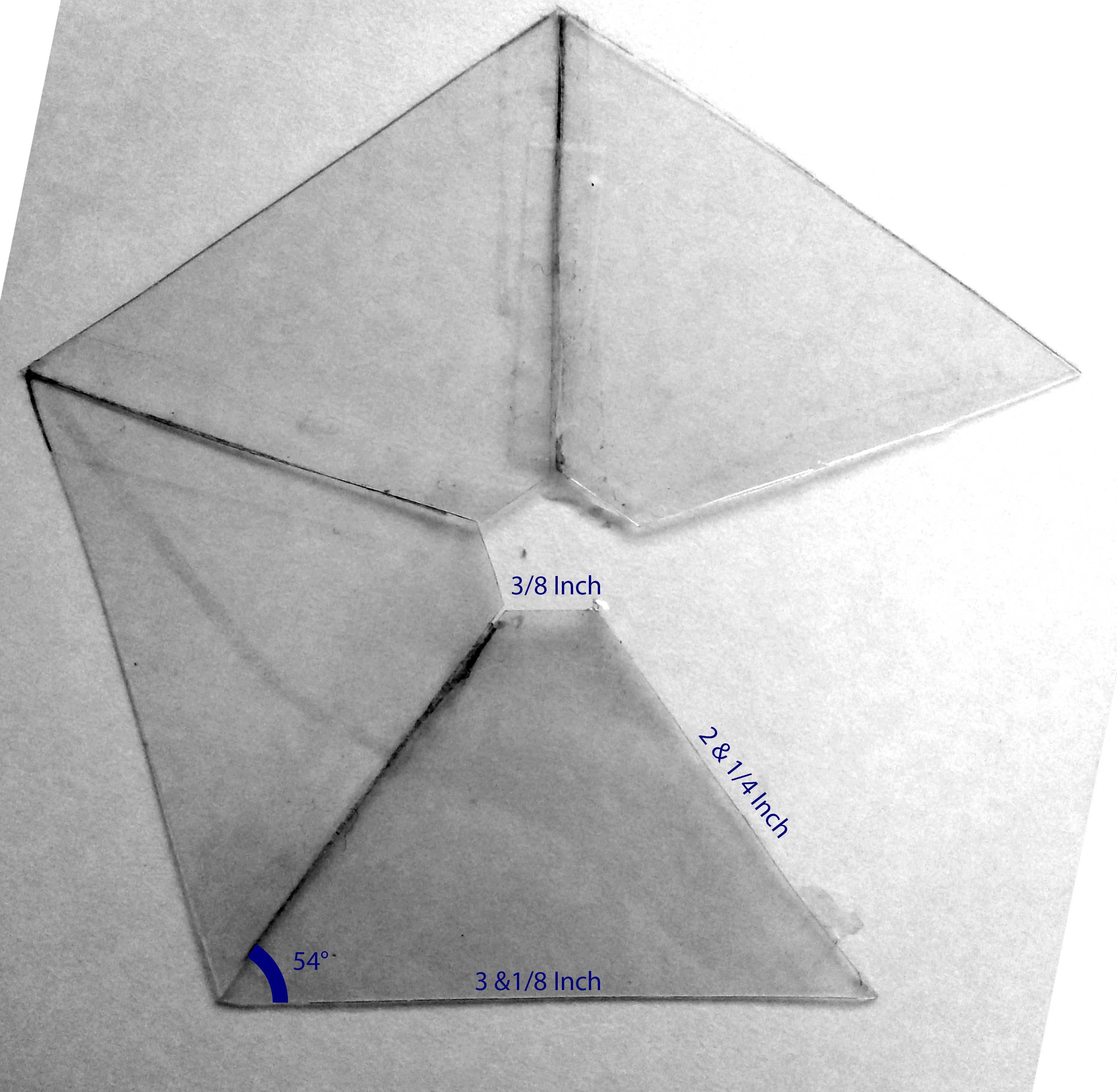 I created my first two pyramids by cutting up a thick plastic food container. I used a paper template, scotch tape and scissors to do the assembly. The first pyramid was poorly sized, too big for a phone. The second collapses nicely but is not especially stable, a little tape closing the bottom of the pyramid helps with stability and getting the pyramid to stick to the phone. Regular plastic seems sufficiently reflective, but a dark background is a requirement for viewing.
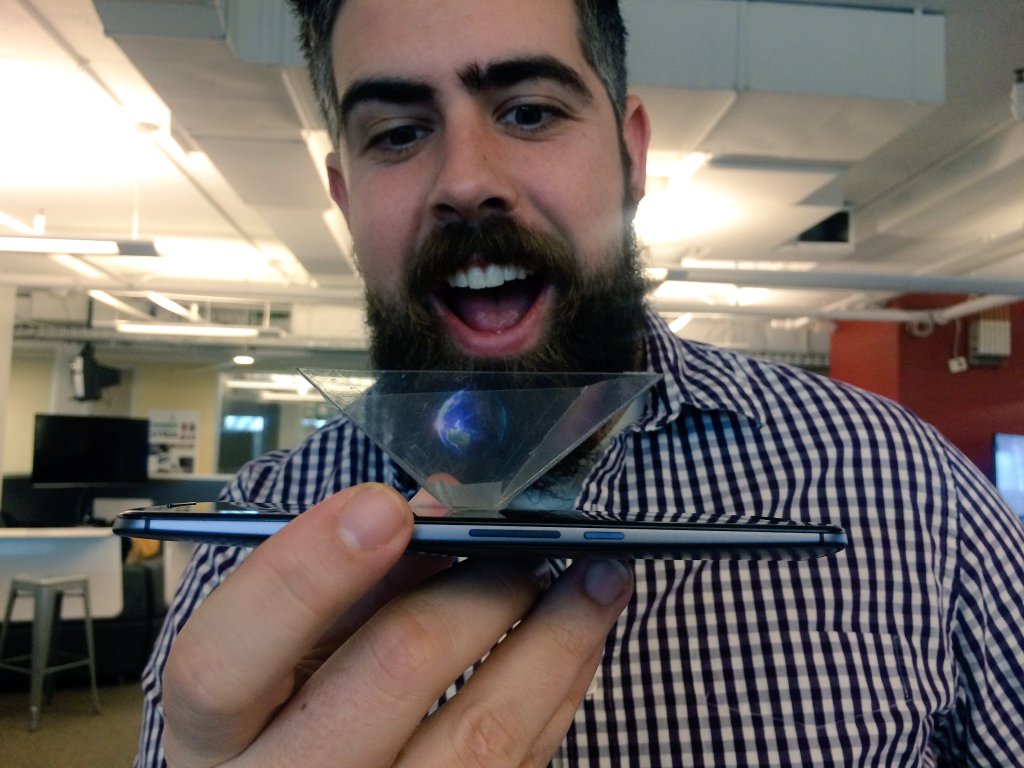
There is plenty of generic content available on YouTube, but I wanted to figure out how to create my own. I developed a template in After Effects that uses four cameras properly arranged around a single scene and composited together into a single video that is compatible with the pyramid. 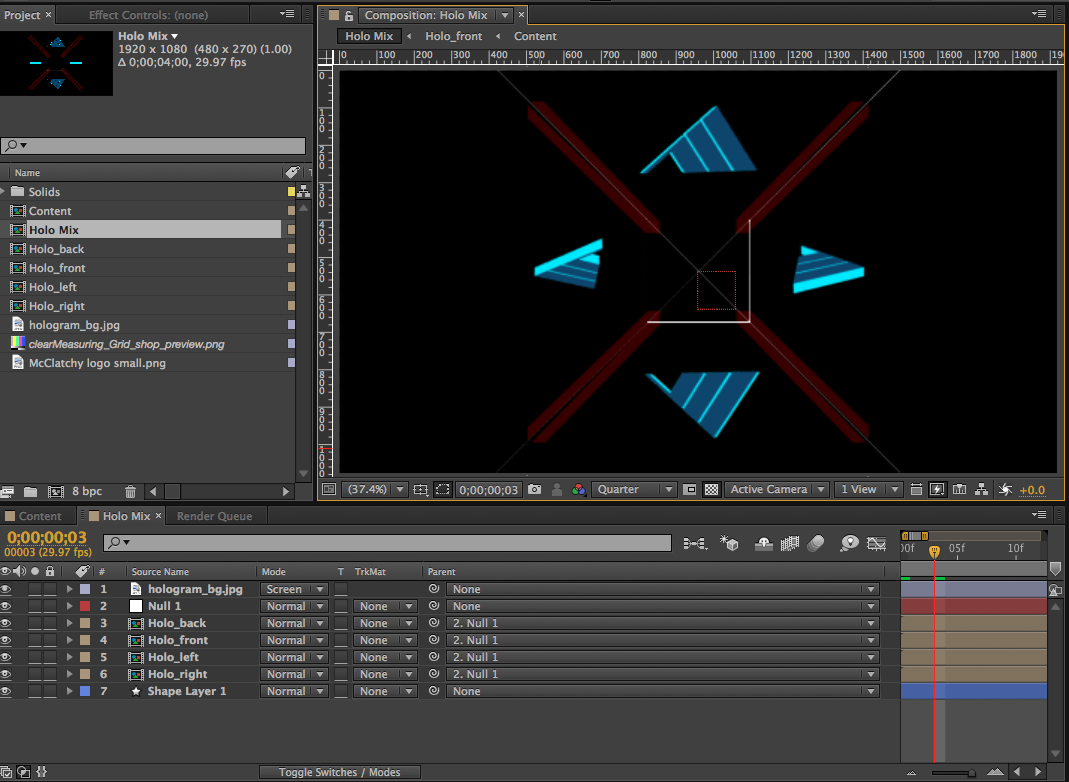
Using the template, I created this sample video:
Here's the final product of this first iteration:
Next Steps
- Work on pyramid design
- Study bulk production
- Create content that demonstrates the narrative potential of the hologram.
- Try shooting original content (Not just rendering graphics)
- Figure out how to import 3D models
- Improve the After Effects Template to show boundaries
Feedback
- On the whole, people are pretty impressed by the illusion
- This pyramid design is pretty slipshod
- The matte tape ruins the illusion
- The pyramid is poorly sized for my phone
- The pyramid slips around when I try to turn the display